
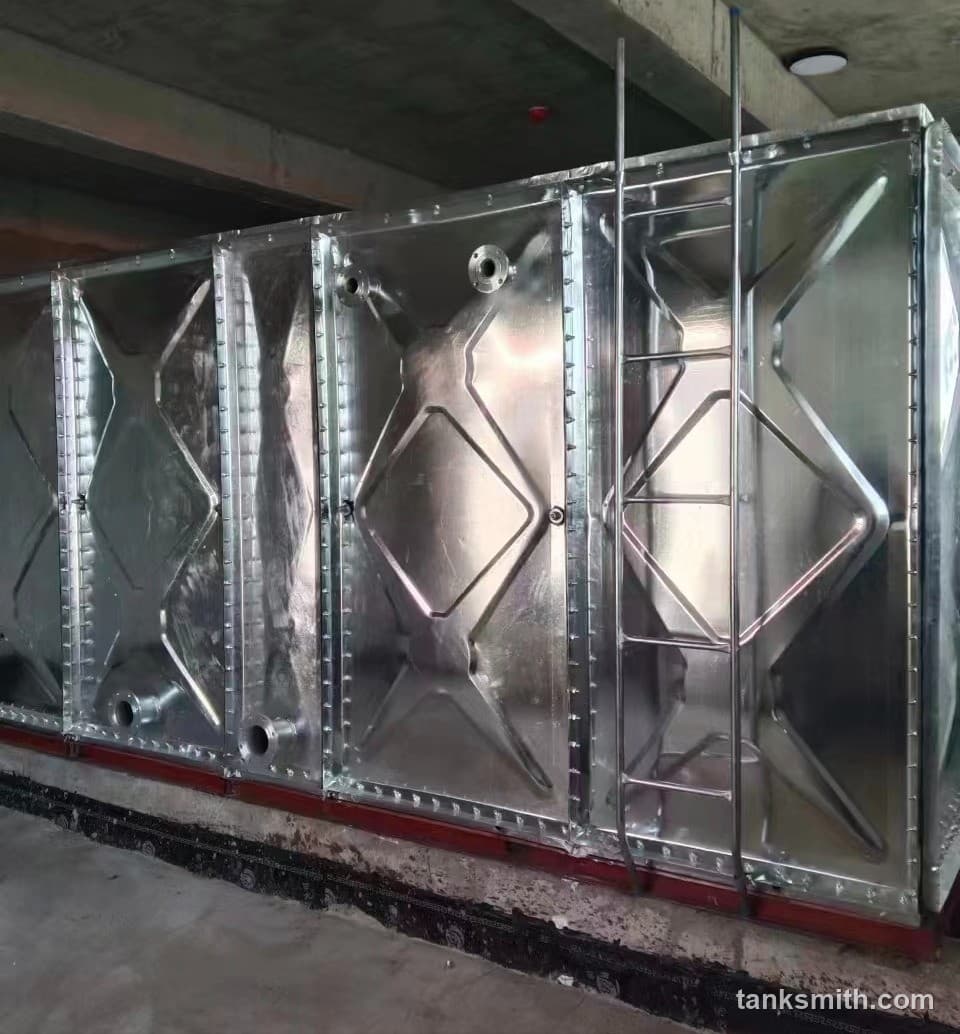
Hot-Dip Galvanized (HDG) Steel Panel Tank
20 m³ to 5,000+ m³
Heavy-duty galvanized steel panels for large-volume industrial storage, fire-suppression reserves, and underground installations. Higher mechanical strength than FRP/GRP at scale.
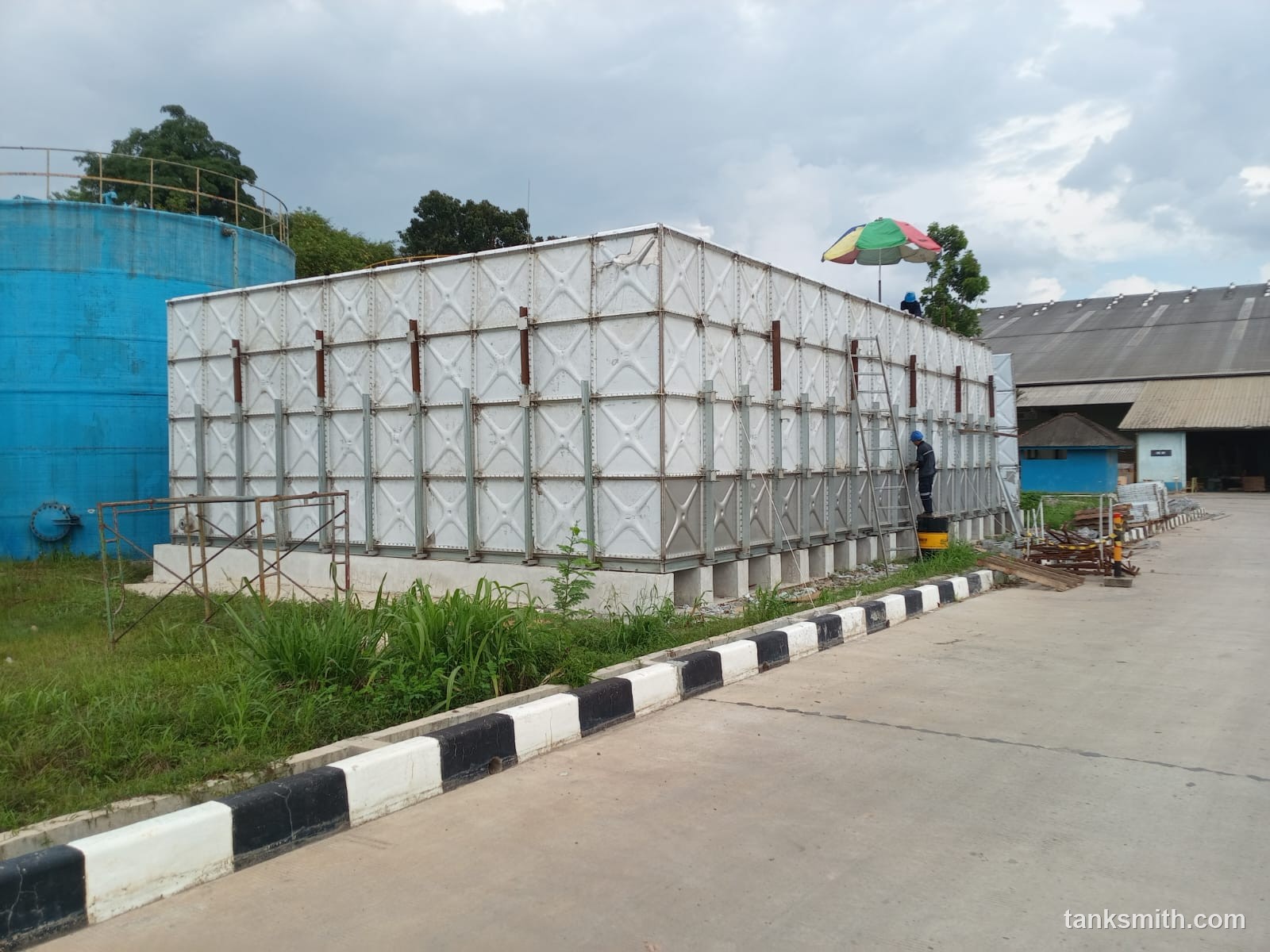
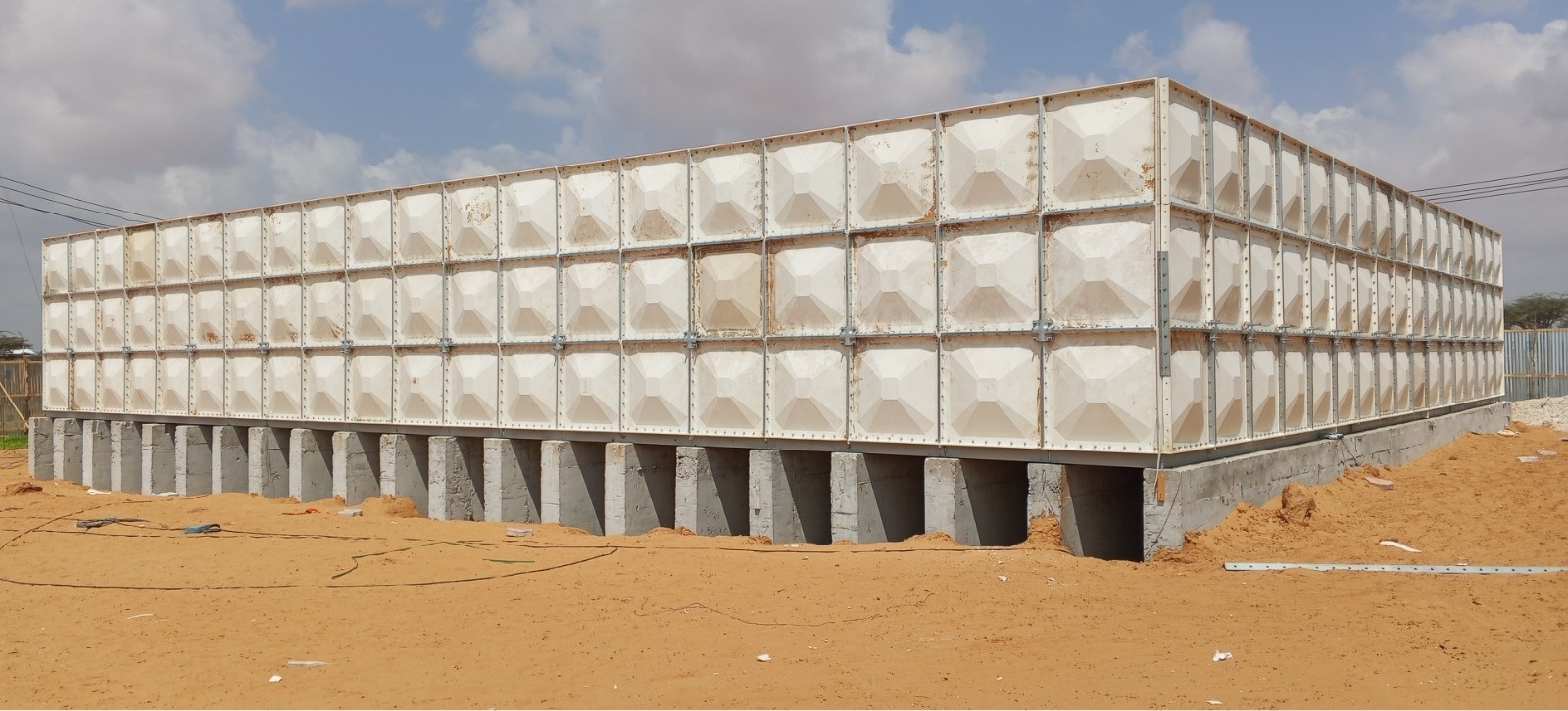
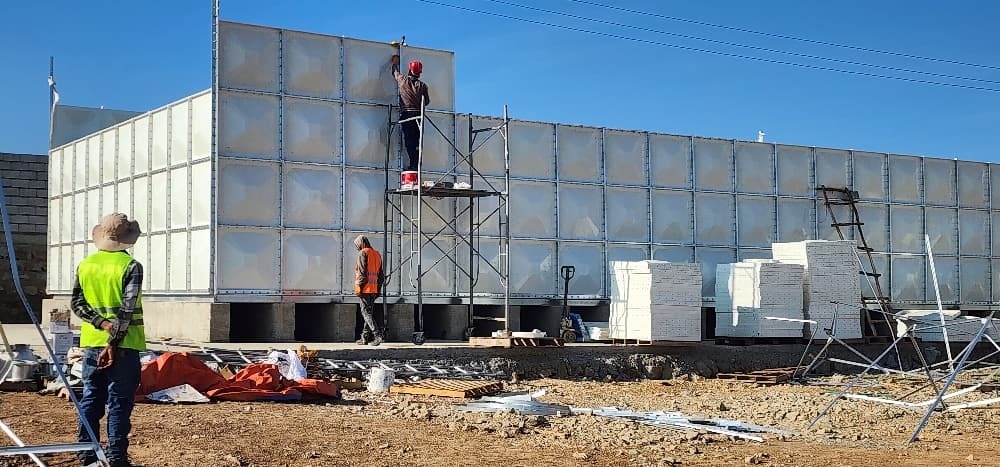
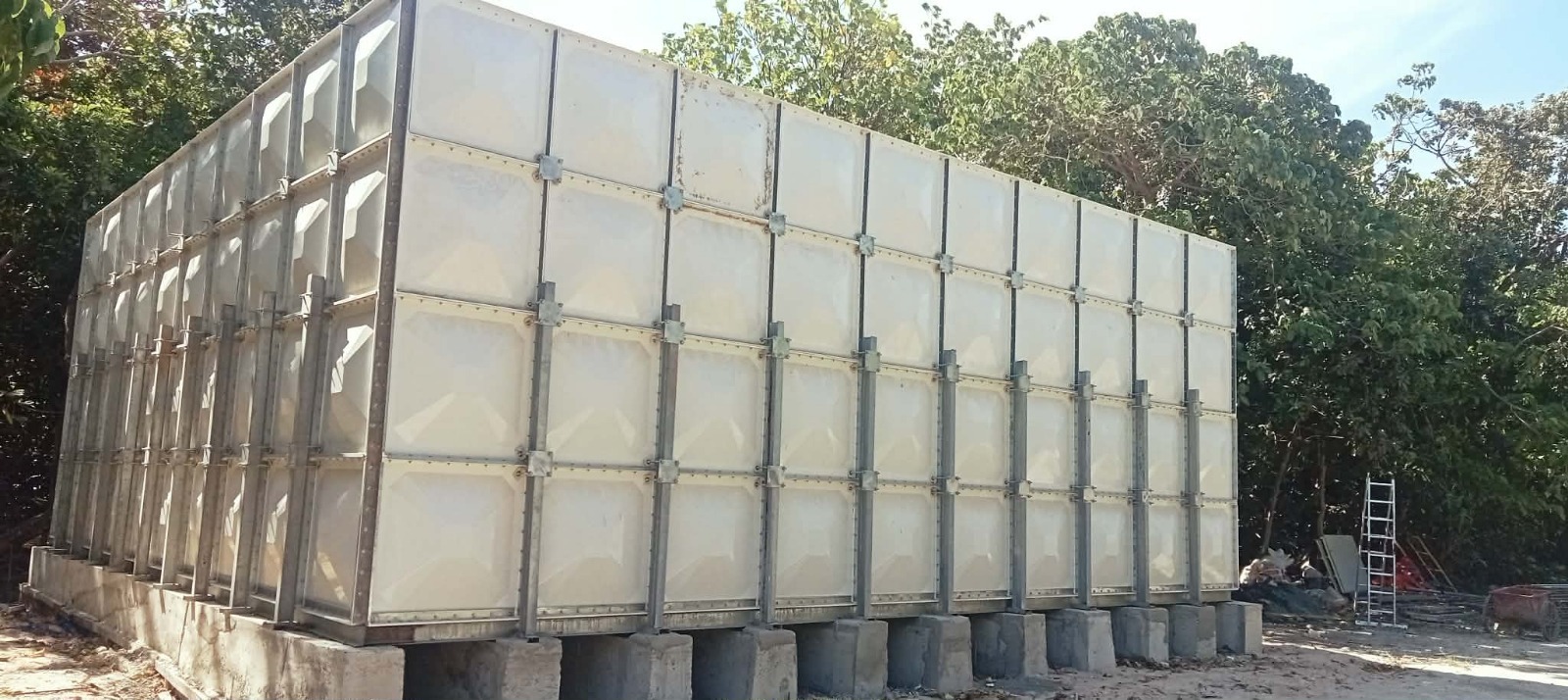
Q235 cold-rolled steel panels with 80–120 µm hot-dip zinc coating (Z275/G90 grade). The right choice for large-volume industrial storage, BFP/NFPA fire reserves, and underground installations where mechanical strength is the primary requirement.
All tanks WRAS-certified. Custom capacities and configurations available.
When HDG steel is the right answer
A hot-dip galvanized steel panel tank is the right material when mechanical strength matters more than corrosion resistance. Three scenarios drive HDG selection in the Philippines:
- 01.Very large volumes (300 m³+). HDG panels carry more load per square metre of wall area, so very tall tanks (above 4 m) become structurally cheaper than equivalent FRP/GRP.
- 02.Fire-reserve tanks under BFP / NFPA compliance where the AHJ-approved engineer specifies steel construction with documented zinc coating thickness.
- 03.Underground installations where backfill pressure and ground-water hydrostatic load require a tank with high external-collapse resistance.
Outside those three cases, GRP/FRP is usually the better commercial choice for the same capacity: lighter, faster to install, easier to repair.
Specifications
| Panel material | Cold-rolled steel, hot-dip galvanized post-press |
| Zinc coating | 80–120 µm (Z275 / G90 grade), per BFP/NFPA spec |
| Panel thickness | 3.2–6 mm (varies by tank height and depth) |
| Standard panel sizes | 1250 × 1250 mm |
| Tank height | Up to 5 m single tier; taller with structural review |
| Capacity range | 20 m³ to 5,000+ m³ |
| Internal liner | Food-grade EPDM membrane (potable) or bare HDG (process / fire reserve) |
| Fittings | Galvanized + SS304/316 bolts |
| Service life | 15–20 years (potable); 20–25 years (fire reserve, dry-stored) |
| Pressure rating | Atmospheric (vented) |
| Temperature | Continuous service to 60 °C |
Standard panel sizes and dimensions
| Capacity | Footprint (L × W × H) | Common application |
|---|---|---|
| 100 m³ | 8 × 4 × 3.75 m | Warehouse fire reserve |
| 250 m³ | 10 × 7.5 × 3.75 m | Factory potable + fire combined |
| 500 m³ | 16 × 10 × 3.75 m | Industrial fire reserve, NFPA-13 facility |
| 1,000 m³ | 20 × 16 × 3.75 m | Logistics hub fire suppression |
| 2,000+ m³ | Custom | Heavy industry, refinery |
Where it's installed
- NFPA-compliant warehouse fire reserves: 200 m³ to 1,500 m³ for sprinkler/hose systems
- Refineries and heavy manufacturing: process water, cooling-tower make-up
- Mall and high-rise fire reserves: paired with diesel-driven fire pumps
- Underground potable / fire combined: buried tanks for sites with no surface footprint
- LGU bulk water storage: emergency reserves, fire stations
Fire-reserve compliance (BFP / NFPA)
- Mill certificates documenting steel grade and zinc coating thickness
- Pressure-test records signed by both crew and client engineer
- Pump-room layout drawings showing tank-to-pump suction NPSH calculations
- Vent, overflow, and low-level alarm provisions per NFPA
How it's installed
- 01.Pad and foundation: typically a reinforced-concrete raft pad designed for the filled load; for buried tanks, a concrete pit with waterproof membrane and gravel bedding.
- 02.Panel delivery: flat-packed in galvanized condition; one trailer per ~150 m³ approximately.
- 03.Assembly: panels are bolted in sequence with food-grade EPDM gaskets (potable) or chloroprene gaskets (fire reserve), torqued to spec.
- 04.Internal liner: for potable service, an EPDM membrane is fitted before commissioning. For fire reserve, bare HDG is acceptable.
- 05.Fittings: manhole, vent, overflow, drain, level switch, and pump-suction flange installed.
- 06.Test and commissioning: fill test, 24-hour leak hold, disinfection (for potable), handover documents.
Typical timeline: 8–12 days for 250 m³, 14–21 days for 500 m³+.
Pricing: what drives the cost
HDG steel panel tanks are typically 10–20% more expensive per m³ than GRP/FRP at the same capacity. For projects above 500 m³, HDG often becomes the cheaper option per m³ because the panel module is larger and installation labour scales sub-linearly. Key cost drivers:
- 01.Steel and zinc commodity pricing: directly tied to global steel and zinc indices.
- 02.Coating spec: heavier zinc coatings (BFP-compliant 120 µm) add cost.
- 03.Internal liner: EPDM membrane for potable adds material and labour.
- 04.Foundation: heavier filled weight sometimes drives a bigger pad.
- 05.Underground installations: pit excavation, waterproofing, and structural pit walls double the civil works budget.
Common questions
Will HDG steel rust in PH humidity?
Not for 15–20 years if the zinc coating is intact. The hot-dip process produces a metallurgically bonded zinc layer that sacrifices itself to protect the steel beneath; scratched areas self-heal electrochemically. We supply only mill-certified coating thickness, and field touch-up paint is included with delivery.
Can HDG steel store potable water?
Yes, with an EPDM food-grade liner. We do not recommend bare HDG for long-term potable storage (the water can mobilize trace zinc over years); the liner solves this and meets WHO drinking-water guidance.
Can the tank be buried?
Yes. Underground installation requires a reinforced-concrete pit, waterproof membrane, gravel bedding, and a vented manhole at grade. We design the pit and install both pit and tank as one scope.
How does HDG steel compare to GRP / FRP?
HDG is mechanically stronger, more cost-effective at 500 m³+, and the default specification for many fire-reserve AHJs. GRP is lighter, faster to install, corrosion-immune (not just corrosion-resistant), and the better commercial answer at 5–250 m³ for non-fire applications.
Do you supply the fire pump and jockey pump too?
Yes. For NFPA-20 fire pump applications we supply UL/FM-listed diesel and electric pump packages alongside the tank.
Pair it with
Fire-reserve and high-capacity industrial tanks are usually paired with NFPA-20 fire pumps (UL/FM-listed) or pressure booster pump systems for distribution. We supply both alongside the tank: sized to the tank's suction head and the fire-protection engineer's hydraulic calculation.
GRP / FRP Panel Tank
5 m³ to 1,000+ m³
The industry standard. Corrosion-proof, food-safe, fully modular. Built to any capacity on-site.
View SpecsStainless Steel Tank
5 m³ to 500+ m³
SS304 or SS316 modular panels for food processing, hospitals, and high-hygiene applications.
View SpecsReplacement Panels
Individual panels: all tank types
Original panels for tank repair, capacity expansion, or color-coding existing installations.
View SpecsFound this useful? Add TankSmith as a Preferred Source on Google so our tank sizing guides show up first next time you search.