
Pressure Booster Pump System
Matched to tank system
Sized to your tank, your building load, and your municipal supply pressure: then installed and commissioned by the same team that built your tank.
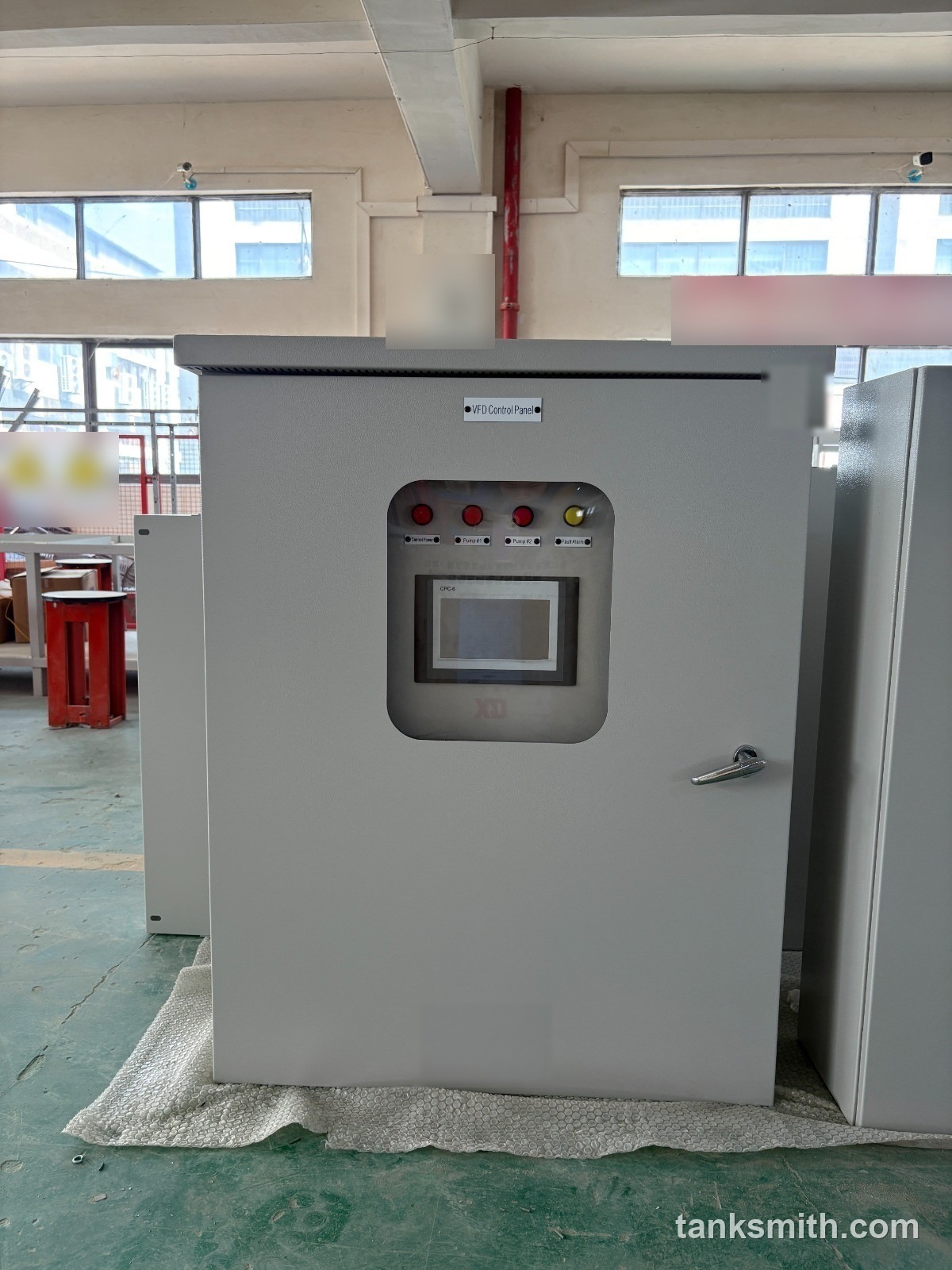
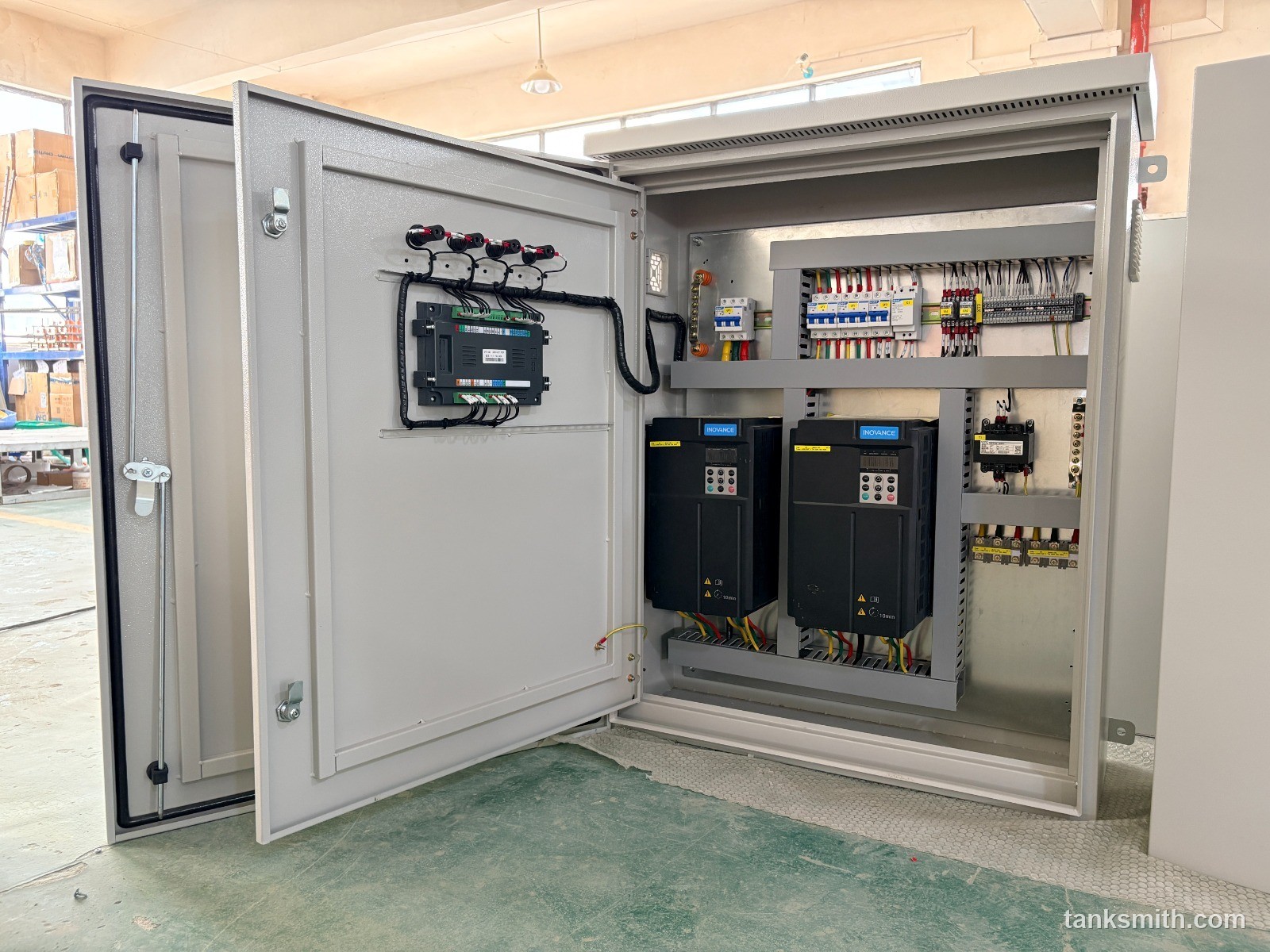
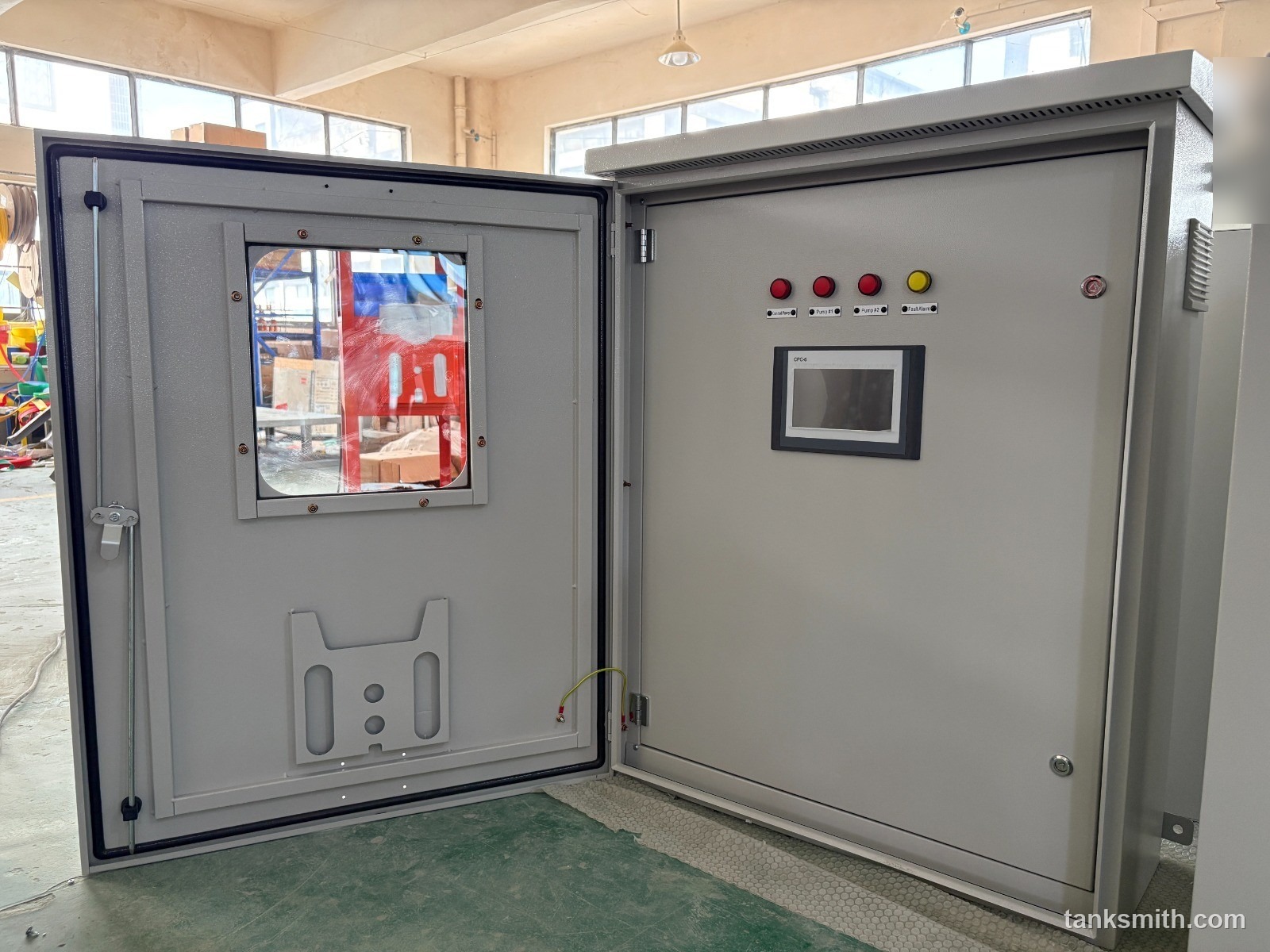
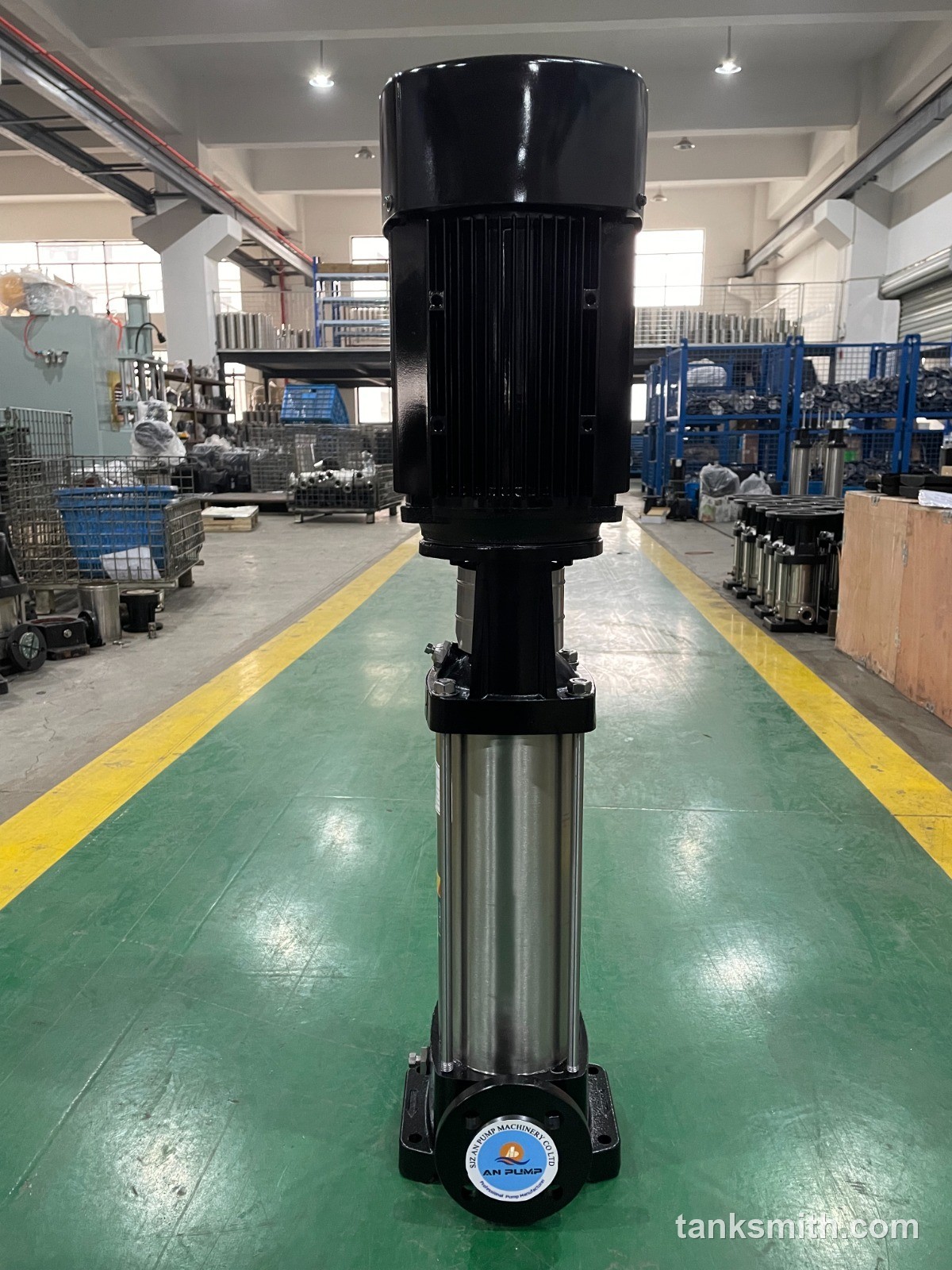
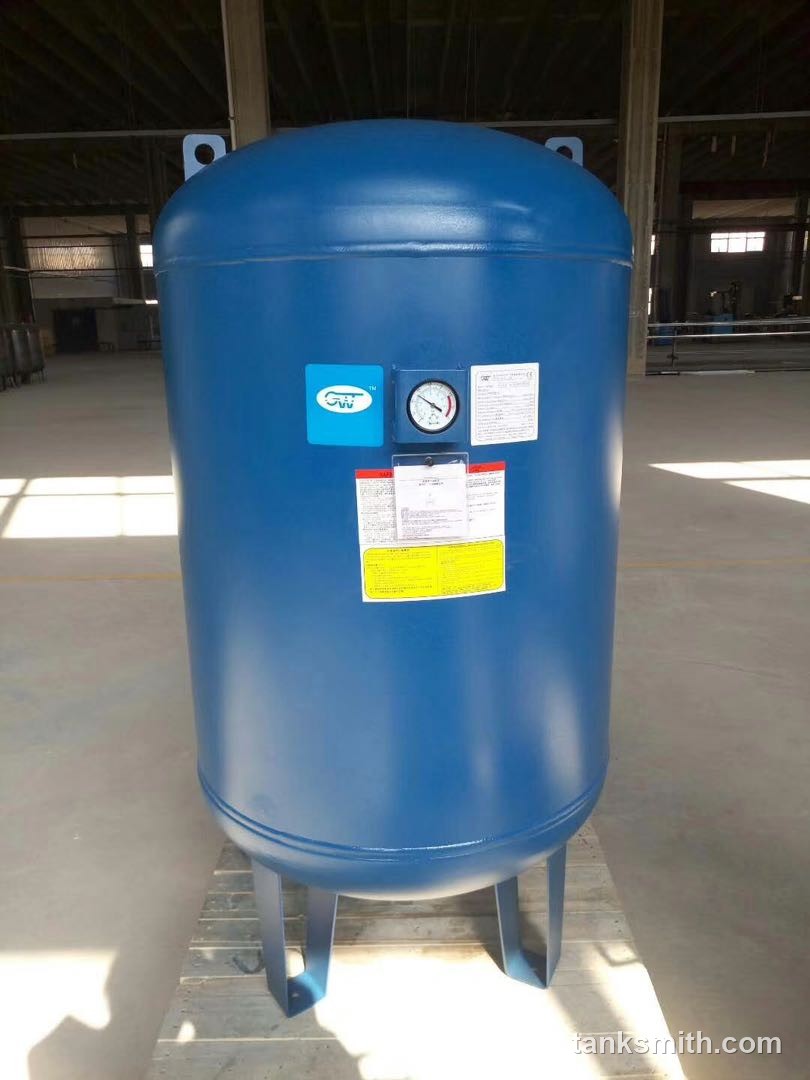
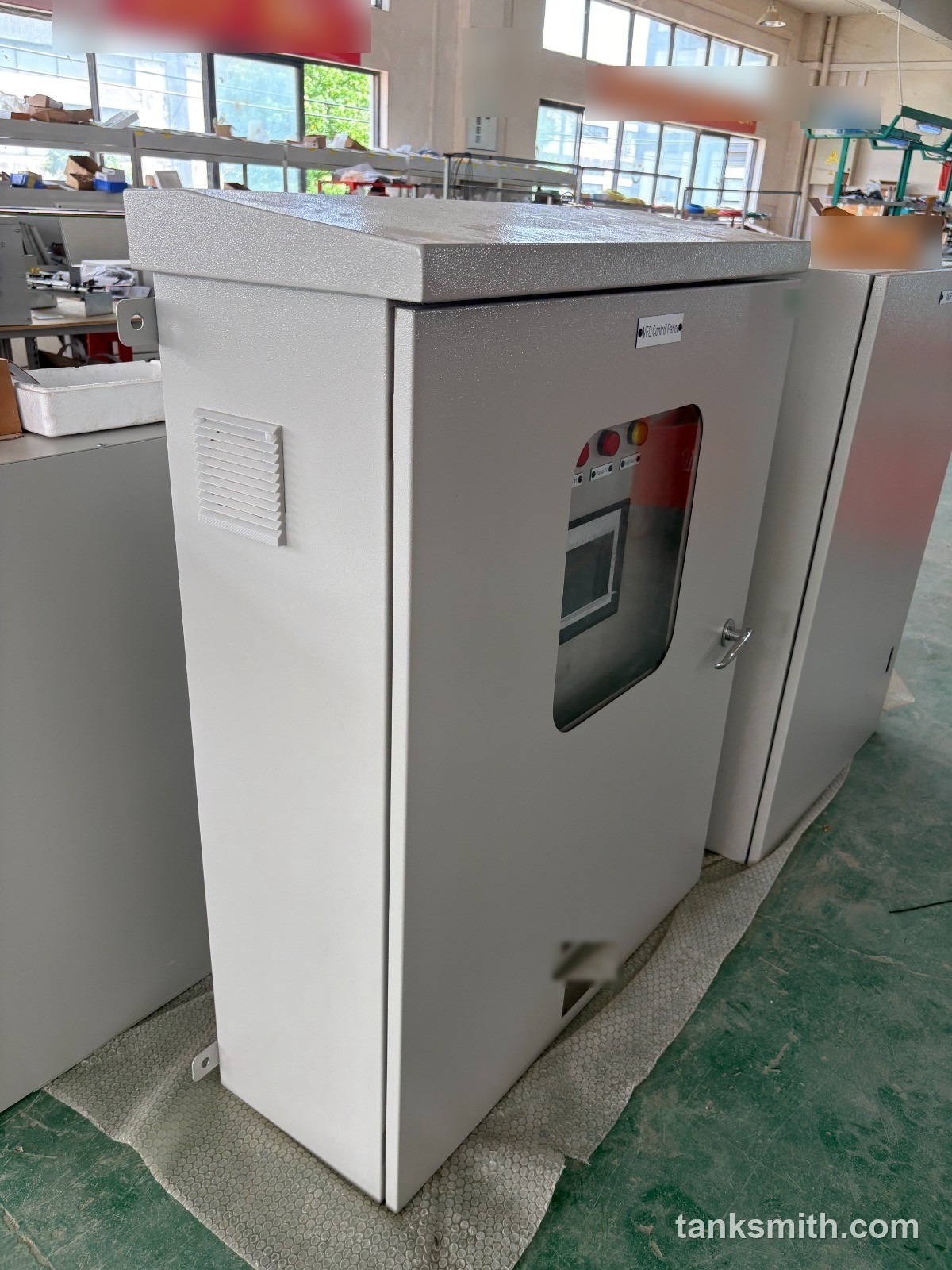
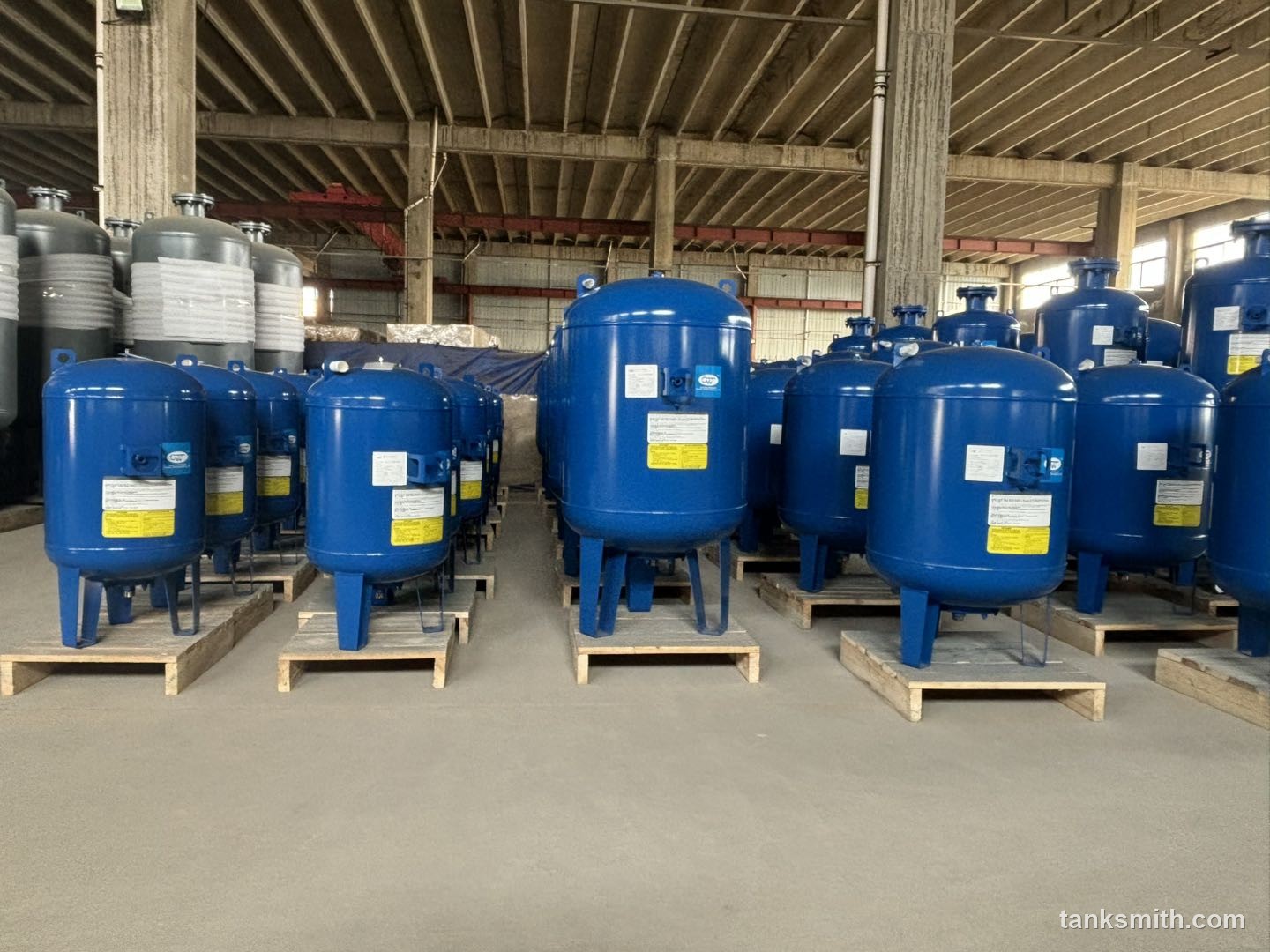
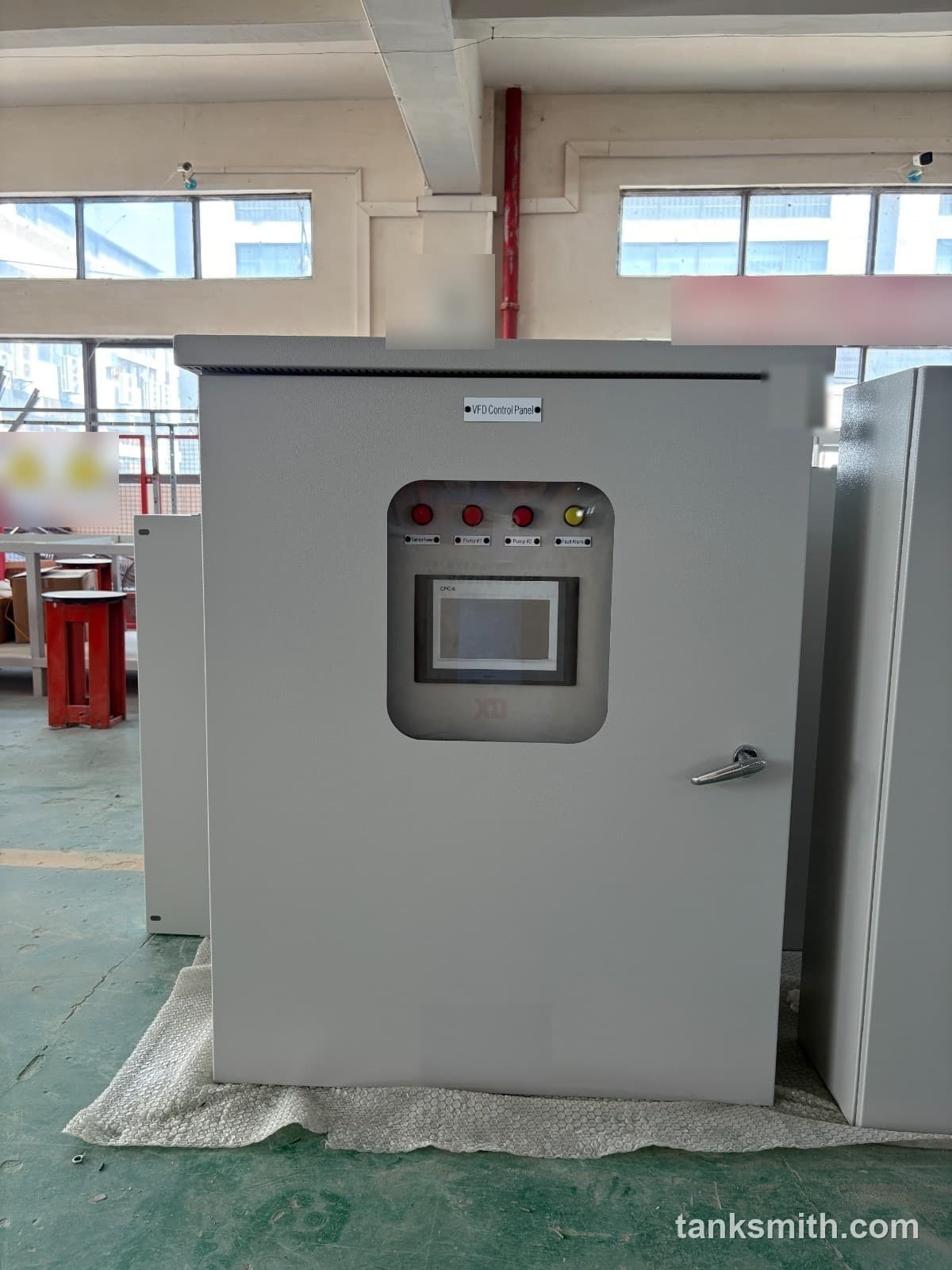
Pressure booster and submersible pump packages with automatic control panels. Supplied and installed alongside the tank as a complete, ready-to-use water distribution system.
All tanks WRAS-certified. Custom capacities and configurations available.
What a pressure booster pump system is
A pressure booster pump system takes water from your storage tank and delivers it at the pressure and flow rate your building actually needs. Without a booster, upper floors in mid-rise buildings often receive weak or intermittent supply: particularly during peak morning demand.
A properly sized system consists of one or more pump heads, a pressure tank (to reduce pump cycling), a pressure controller, isolation valves, and the interconnecting pipework to tie it into your distribution riser.
We supply complete packaged sets: pump, tank, panel, and pipework: or we integrate individual pump heads into existing pump rooms. Both approaches are quoted on the same site visit as the water tank.
Four inputs that drive pump sizing
- 01.Peak demand flow rate: calculated from fixture units (number of toilets, faucets, showers, process outlets) per floor, per building section.
- 02.Required delivery pressure: typically 2.5–4.5 bar at the highest and furthest fixture; higher for fire-line integration.
- 03.Static head: the vertical distance from the pump discharge to the highest outlet, which the pump must overcome regardless of flow.
- 04.Available inlet pressure: municipal supply or tank outlet pressure, which is subtracted from total differential head required.
Oversized pumps short-cycle, destroying motor windings in months. Undersized pumps run continuously and still underdeliver pressure. Proper sizing is not an upsell: it is the job.
Standard packaged system components
- Pump heads: CDL multistage stainless-shaft or Grundfos CM/CME series; twin-pump (duty/standby) configuration standard for commercial buildings.
- Pressure expansion tank: 8–50 L bladder tank to absorb minor demand fluctuations and prevent short-cycling.
- Pressure controller: adjustable cut-in / cut-out pressure switch; or variable-frequency drive (VFD) for constant-pressure operation.
- Manifold and isolation valves: full-port ball valves on each pump head; non-return valves on discharge; pressure gauge on header.
- Control panel: DOL or star-delta starters for fixed-speed pumps; VFD cabinet for variable-speed; alarm output for dry-run or overtemperature.
Common configurations by building type
| Building type | Typical configuration |
|---|---|
| Warehouse / factory (process water) | Single-pump fixed-speed, 0.75–2.2 kW, pressure-switch control. |
| Low-rise residential (3–6 floors) | Twin-pump duty/standby, 1.5–3.7 kW each, pressure-switch control. |
| Mid-rise condominium (7–20 floors) | Twin-pump VFD constant-pressure, 3.7–11 kW each, SCADA-ready panel. |
| Hospital / hotel (critical supply) | Triple-pump configuration (2 duty + 1 standby), UPS-backed control panel, BMS integration. |
Installation sequence: 7 steps
- 01.Pump room survey: confirm floor load rating, drainage, electrical supply (voltage, phase, breaker capacity), and ventilation.
- 02.Equipment delivery: skid-mounted packaged set delivered pre-assembled where pump room access allows; or component-wise for tight rooms.
- 03.Base frame anchoring: pump skid bolted to concrete pad; anti-vibration mounts where noise is a concern.
- 04.Pipework connection: inlet from tank outlet, discharge to distribution riser; unions on all pump heads for future servicing.
- 05.Electrical termination: power to control panel; alarm output to BMS or watchman buzzer.
- 06.Commissioning: set pressure cut-in/cut-out; check rotation; run at full flow and record actual discharge pressure versus design target.
- 07.Handover: as-built sketch, pump datasheet, commissioning report, and brief operations walkthrough for building engineer.
VFD (variable-frequency drive) systems cost 25–40% more upfront but cut pump energy consumption by 30–50% in buildings with variable demand profiles: typically recovering the premium within 18–30 months on utility bills.
What goes into the price
- 01.Pump selection: brand, model, kW rating, and number of heads (single, twin duty/standby, triple).
- 02.Drive type: fixed-speed DOL vs. variable-frequency drive: VFD adds a premium per pump head depending on kW.
- 03.Pressure tank size: 8 L to 50 L; larger tanks reduce cycling but add cost.
- 04.Control panel specification: basic pressure switch vs. full VFD cabinet with BMS output.
- 05.Pump room works: pipework length, number of bends, isolation valve count, base frame fabrication.
- 06.Commissioning and documentation: always included; no add-on fees for the sign-off report.
Pressure Booster Pump: Frequently Asked Questions
Can you supply the pump even if TankSmith did not install our tank?
Yes. We size and supply booster pump systems for any existing tank, provided we can verify the tank outlet size and available head.
What brands of pump do you supply?
CDL multistage stainless-shaft pumps for general-purpose and industrial use; Grundfos CM/CME for pharmaceutical and food-grade applications; Grundfos NB/NK end-suction for high-flow low-head applications. We specify the right brand for the application, not a single default.
Do you provide after-sales service and spare parts?
Yes. We stock common wear parts (mechanical seals, impellers) for CDL and Grundfos. Labor for scheduled preventive maintenance or breakdown response is billed per visit outside the 12-month warranty period.
How long does pump installation take?
A standard twin-pump skid installation in a prepared pump room takes one working day. Complex rooms with confined access or significant pipe rerouting may require two days.
What is included in the 12-month warranty?
All parts and labor for defects in materials or workmanship. Wear items consumed by abnormal operating conditions (dry-run damage, incorrect voltage supply) are not covered: these are prevented by the dry-run protection included in our control panels.
Pair it with
Booster pumps are most effective when paired with a properly sized storage tank. If you are quoting both together, we apply a combined mobilisation: one site visit, one commissioning date.
GRP / FRP Panel Tank
5 m³ to 1,000+ m³
The industry standard. Corrosion-proof, food-safe, fully modular. Built to any capacity on-site.
View SpecsHDG Steel Panel Tank
20 m³ to 5,000+ m³
Heavy-duty galvanized steel panels for large-volume industrial, fire reserve, and underground storage.
View SpecsStainless Steel Tank
5 m³ to 500+ m³
SS304 or SS316 modular panels for food processing, hospitals, and high-hygiene applications.
View SpecsFound this useful? Add TankSmith as a Preferred Source on Google so our tank sizing guides show up first next time you search.